When 2 Cousins go to War…
People in this story: Enoch Critchlow Sr · Mary Moreton (née Critchlow) · Arthur Pollard Moreton · Enoch Critchlow Jr · Arthur Norman Moreton · Gerald Critchlow Moreton · William Harry Critchlow
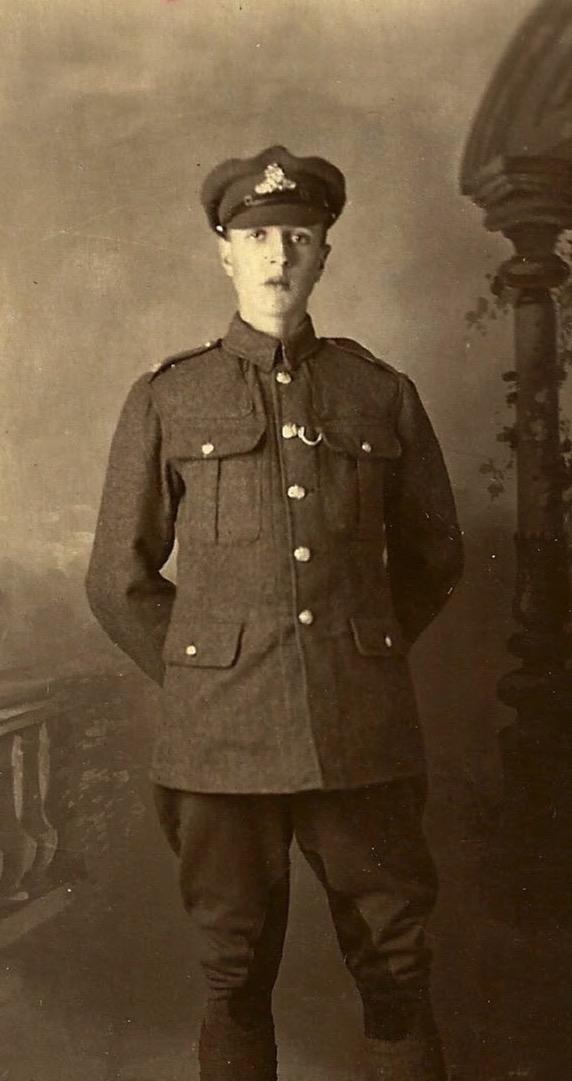
William Harry Critchlow (left of the two photos)
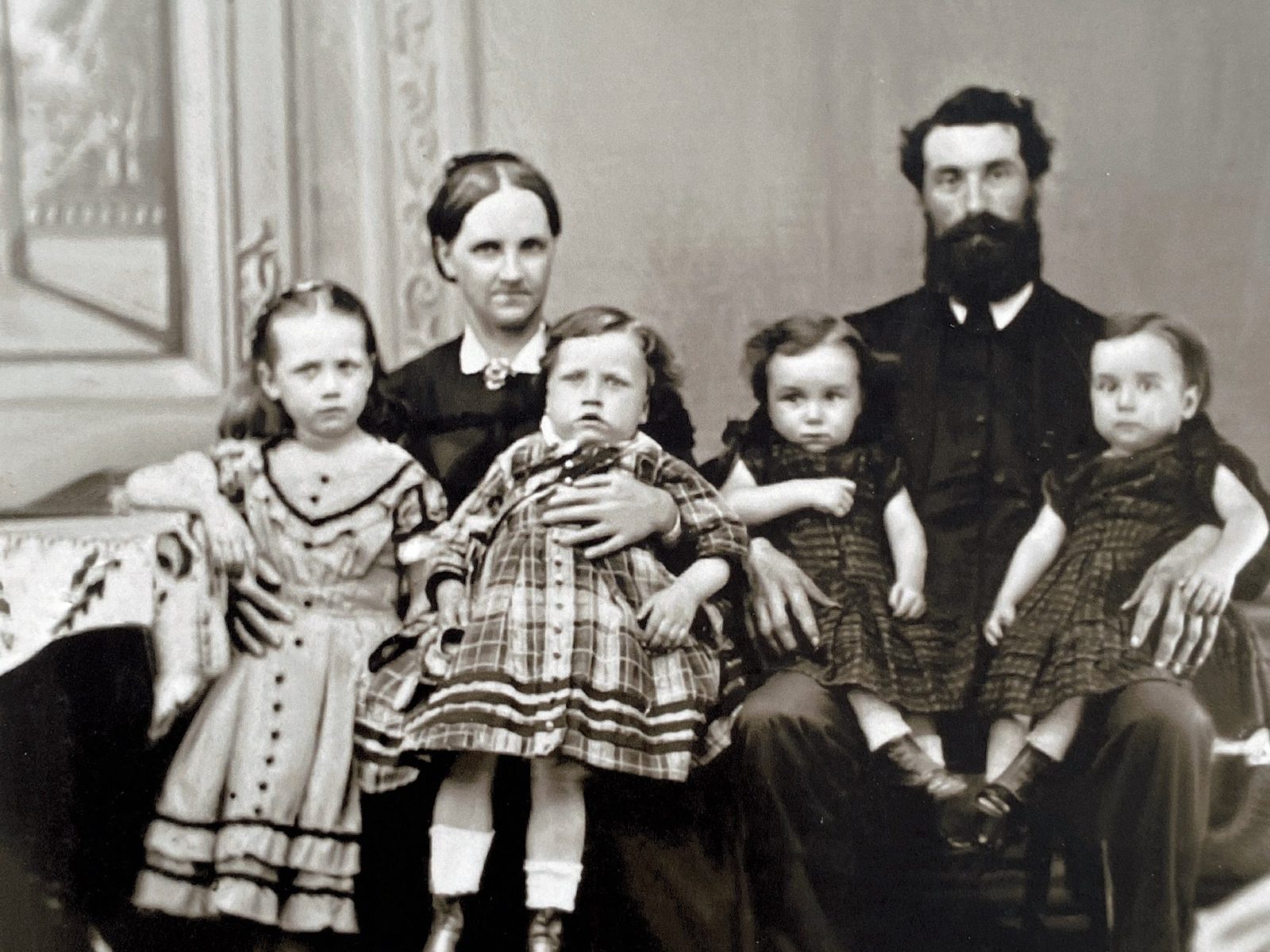
Enoch Critchlow was born in January 1867, the third of five children of Enoch and Elizabeth [Simcock] Critchlow. His eldest sister, Annie died at age 4 before he was year old; and a similar tragedy struck his younger twin brothers, Samuel Herbert and Stephen Leonard who died at 2 years old. Only Enoch and his older sister Mary would survive to adulthood and go on to have their own families.
Enoch joined his father, Enoch, as an apprentice crate maker in the potteries close by to 81 Botteslow Street, Hanley where the family lived. Both the pottery and Botteslow Street have been demolished. with a new housing development built in its stead (and Botteslow is now a grassed area next to the road).
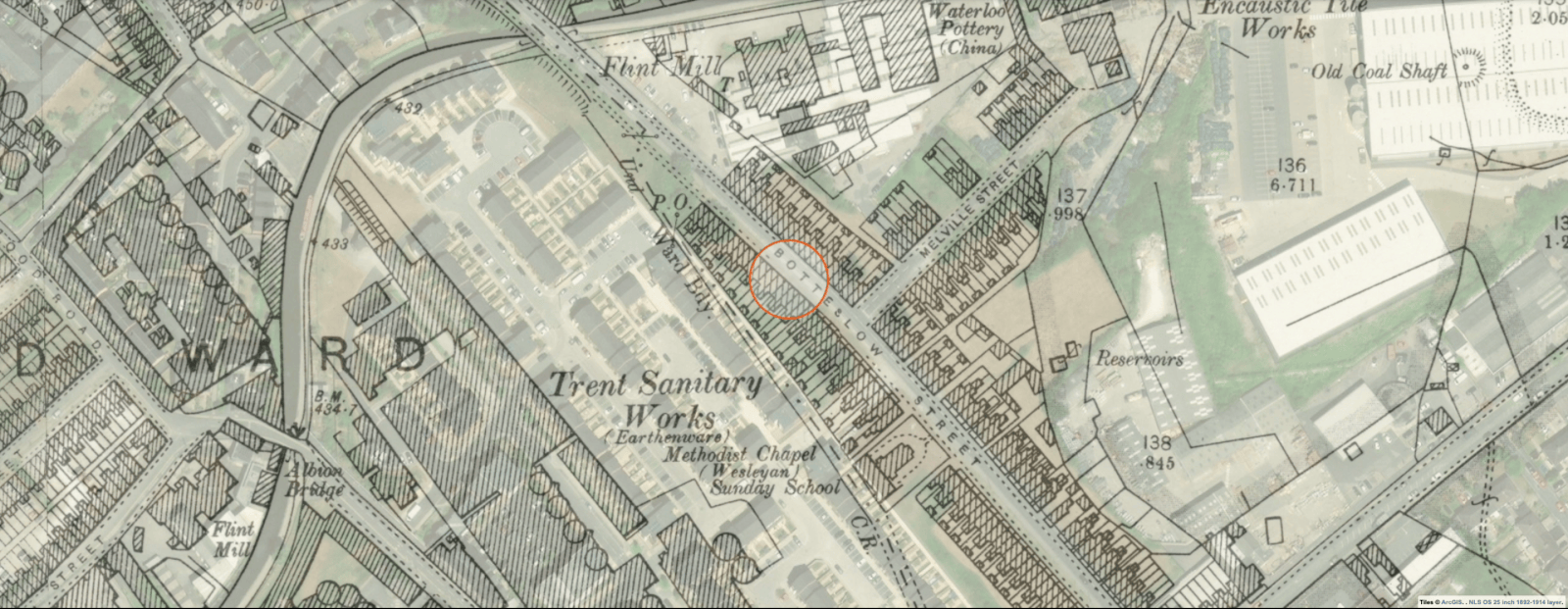
When Enoch married Louisa Holmes in 1892, they set up home next door in 79 Botteslow Street, Hanley before moving locally to 4 Baker Street, Bucknall. They had 5 children together: Mary Elizabeth on 23rd March 1893; Gertrude Lillian in 1895 (who died in the same year); William Harry on 24th April 1900; Doris Sarah on 11th September 1904; and Kenneth Enoch Critchlow in April 1909.
In 1912, Enoch Critchlow died unexpectedly at the young age of 45 years old, leaving William Harry as the “head of the household” as the oldest male. Louisa had to take any work that she could to make ends meet and the 12 year old, William Harry felt the pressure. When war was declared in 1914, he considered how he might join up given that his “dependents” such as his mother would receive the War Pension if he were killed.
However volunteers had to be 18 years old so William Harry remained at school until he received his school certificate at 15 years old and then on the 1st November 1915, he went to the Hanley Army Recruitment and, lying about his age and home address (stating 170 High Street instead of 4 Baker St), volunteered for the North Staffordshire Regiment of Artillery. He was posted to the 3/2nd North Midland Brigade of the Royal Field Artillery for training.
Extracts from the Wikipedia page on 3rd North Midland Brigade, Royal Field Artillery
The order to mobilise was received on 4 August 1914. Shortly afterwards, the men were invited to volunteer for overseas service, and the majority having accepted this liability, the North Midland Division concentrated at Luton. In November it moved to the area round Bishop’s Stortford where it completed its war training. At the time of mobilisation, the batteries of III North Midland Brigade were each equipped with four 15-pounder guns.
The North Midland Division began embarking for France on 25 February 1915, and by 8 March had completed its concentration at Ploegsteert in Belgium – the first complete Territorial Force division to deploy to the Western Front with the British Expeditionary Force (BEF). It was numbered the 46th (North Midland) Division shortly afterwards.
Hooge
Over the following months the artillery supported the infantry in routine trench warfare in the Ypres Salient. On 19 July the Royal Engineers exploded a mine under the German positions at Hooge, but the infantry of 3rd Division tasked with seizing the crater had not been given a supporting artillery fireplan. As the infantry were being driven out by German artillery, counter-battery fire from 46th Division’s guns and other neighbouring artillery helped to rectify the situation. When the Germans attacked the Hooge crater with flamethrowers on 30 July, 139th (Sherwood Foresters) Brigade of 46th Division was able to stabilise the line with the help of the divisional artillery.
Hohenzollern Redoubt
46th Division’s first offensive operation was the Battle of the Hohenzollern Redoubt. This was an attempt to restart the failed Battle of Loos, and the division was moved down from Ypres on 1 October for the purpose. The Germans recaptured the Hohenzollern trench system on 3 October, and the new attack was aimed at this point. The artillery bombardment (by the field guns of 46th and 28th Division, backed by heavy batteries) began at 12.00 on 13 October and the infantry went in at 14.00 behind a gas cloud. The attack was a disaster, most of the leading waves being cut down by machine gun and shell fire from German positions that had not been suppressed by the bombardment. 1/III NM Brigade was re-equipped with 18-pounder guns in November. On 23 December the 46th (NM) Division was ordered to embark for Egypt. It entrained for Marseilles, and some of the infantry had actually reached Egypt before the order was rescinded on 21 January 1916. The artillery returned from Marseilles and the whole division reassembled on the Western Front near Amiens by 14 February.
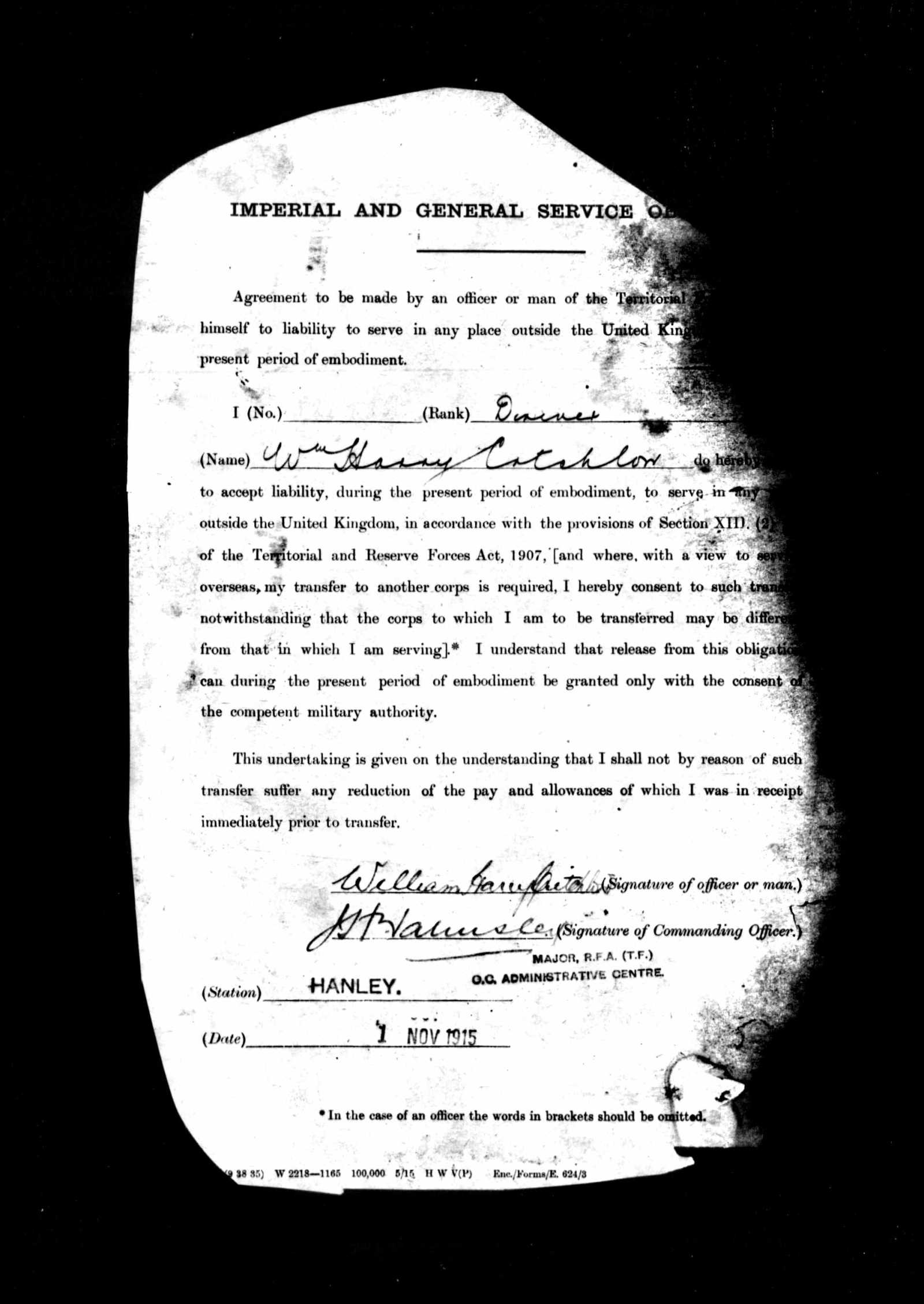
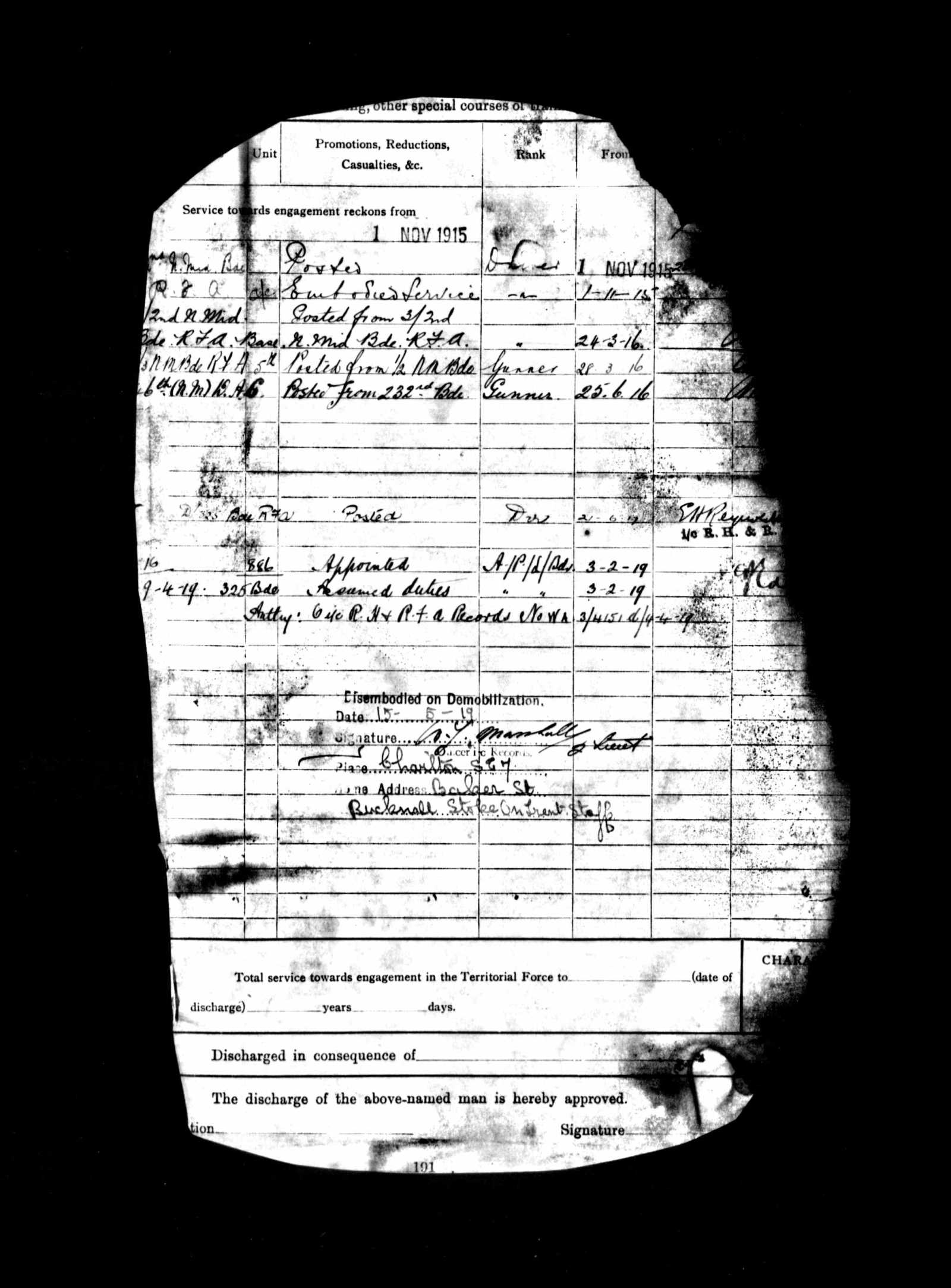
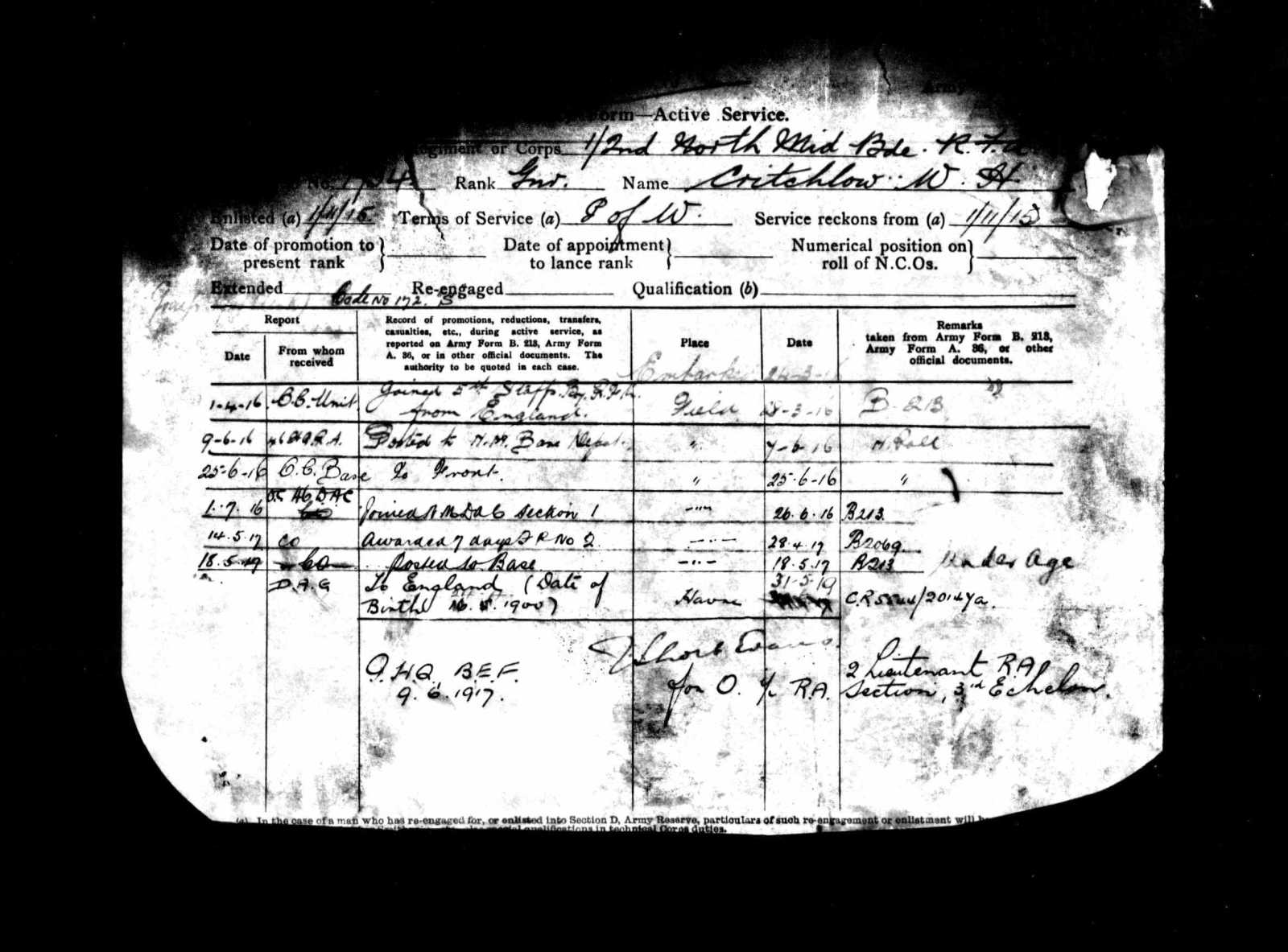
On the 24th March 1916, William Harry disembarked to France with the 1/3rd North Midland Brigade of the Royal Field Artillery which was subsequently renamed the 46th North Midlands Division on 25th June 1916.
Gemini summary of the 1st July 1916
On 1 July 1916, the first day of the Battle of the Somme, the 1/III (3rd) North Midland Brigade, Royal Field Artillery—which had been redesignated in May 1916 as CCXXXII (232nd) Brigade, RFA—was deployed in gun positions facing the Gommecourt Salient in northern France.
Key Details of Their Position & Role
- Sector:Gommecourt (the northernmost sector of the Somme offensive).
- Operational Assignment:
- The 46th (North Midland) Division, alongside the 56th (1st London) Division, was tasked with conducting a major diversionary attack against the heavily fortified German salient at Gommecourt to draw enemy reserves away from the primary British offensive further south.
- Artillery Grouping:
- CCXXXII (232nd) Brigade was paired with CCXXXI (231st / 2nd North Midland) Brigade to form the Left Group of the 46th Divisional Artillery, commanded by Lt-Col Sir Smith Hill Child.
- Target & Objective:
- Their battery positions were laid out to cut barbed wire and provide barrage fire in direct support of the 139th (Sherwood Foresters) Infantry Brigade (specifically the 1/5th and 1/7th Battalions), which attacked across open ground toward Gommecourt Wood.
On the 14th May 1917, William Harry Critchlow was awarded 7 days of Field Punishment No 2 (Army Form B 2069 Offence Report) and subsequently posted to the 325 Brigade.
On the 3rd Feb 1919, William Harry was appointed Ammunition Point Lance-Bombardier [A/P/L/Bdr.] and resumed duties with 325 Brigade
Finally on the 15 May 1919, William Harry was demobilised at the age of 19 and 3 weeks returning back to Baker Street, Bucknall, Stoke-on-Trent. During his service, William Harry Critchlow had been wounded in one leg but survived nearly 3.5 years of trench warfare in the Somme from the age of 16 to 19 years old.
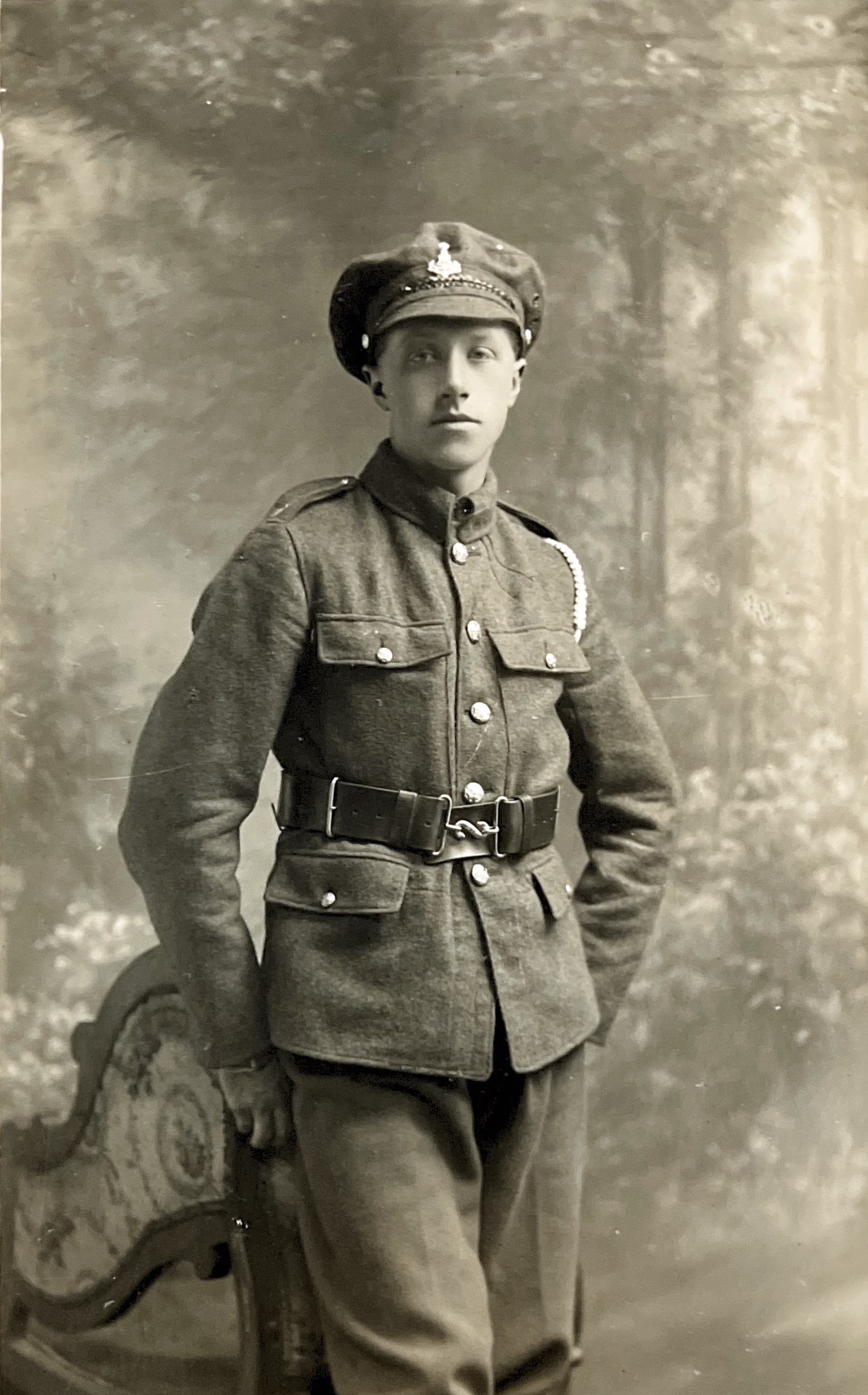
Gerald Critchlow Moreton (right of the two photos)
Mary Moreton [Critchlow] and Arthur Pollard Moreton most likely met in Hanley where they both lived in the late 1890s. Arthur was a Money Lenders Clerk who lived at 240 Cauldron Road, Hanley near Hanley Park and about 1 mile away from Mary at 81 Botteslow Street, Hanley. Perhaps they met in Hanley Park or at Church which were between their homes.
They married in 1895 at St Peters Church, Hanley when Arthur was 26 years old and Mary was 29. They had their first son, Arthur Norman Moreton, on the 22nd June 1897 but he sadly died in December of the same year at 5 months old. It was therefore with much joy that 10 months later on the 7th October 1898, Gerald Critchlow Moreton was born.
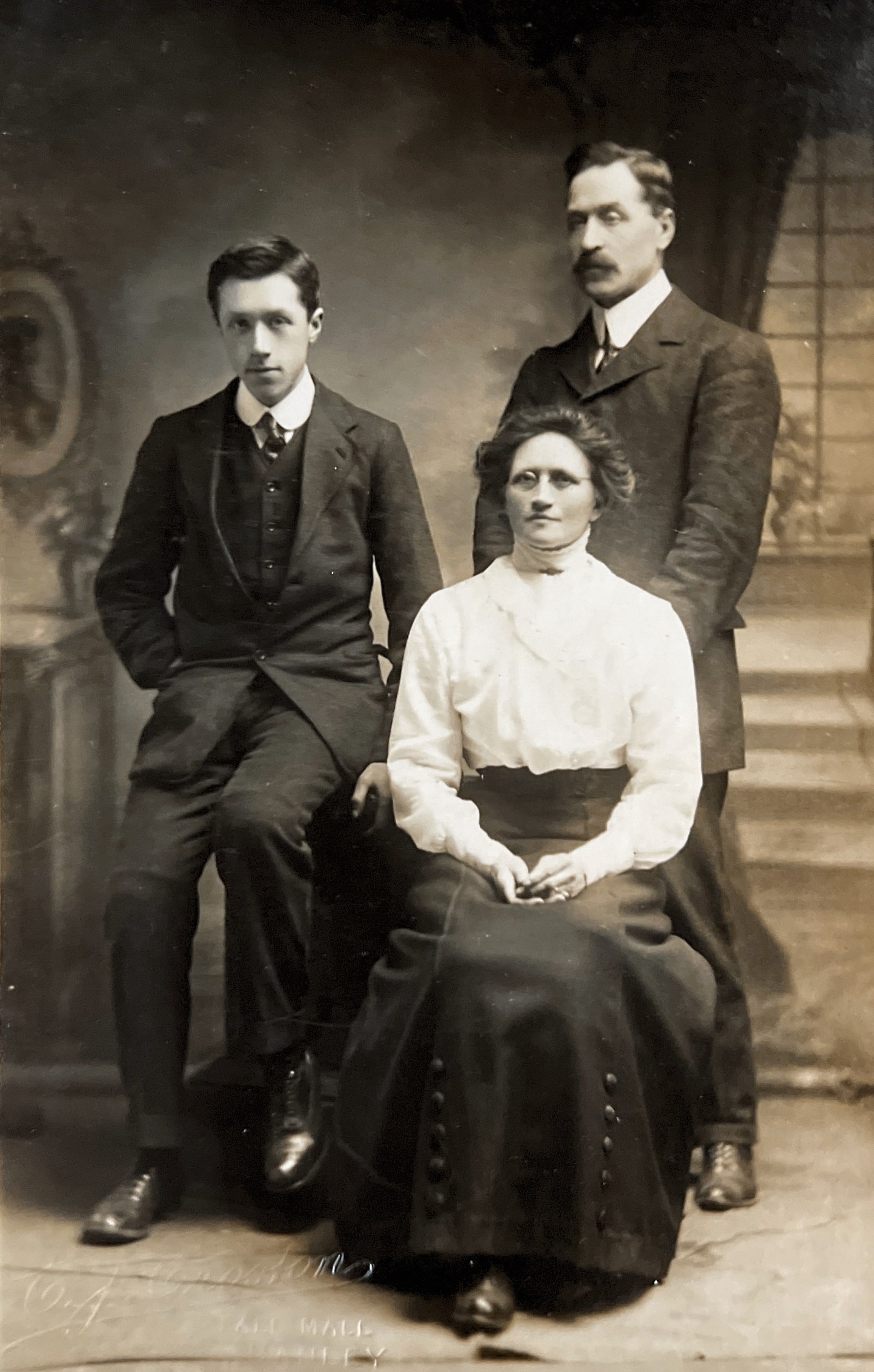
The family lived with Mary’s elderly parents (Enoch Critchlow and Elizabeth nee Simcock) at 81 Botteslow Street, from 1895 but by 1908 they all moved half a mile down the road to Eagle Street, Hanley and then in 1911 a further mile down the road to 225 Werrington Road, Bucknall.
It was a difficult time though with the premature death of Mary’s younger brother, Enoch, at the age of 45 in 1912, followed shortly after by the death in 1915 of her mother, Elizabeth [Simcock] at the age of 82. But in 1914, with the outbreak of the First World War, things took a further turn for the worse.
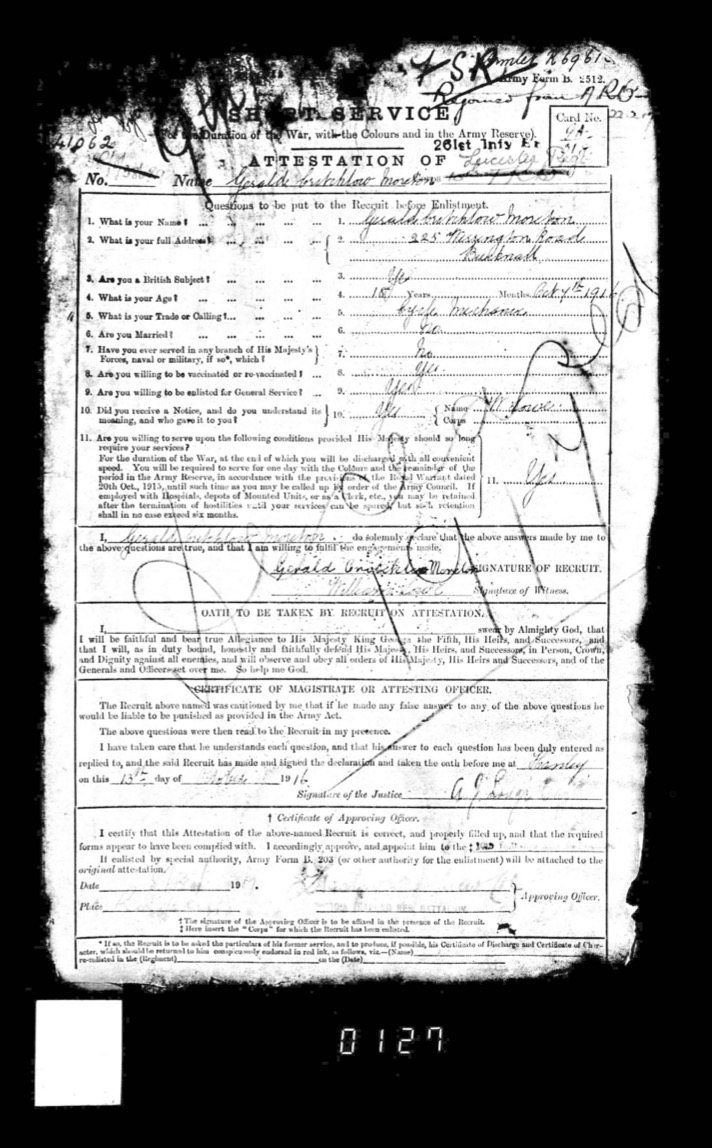
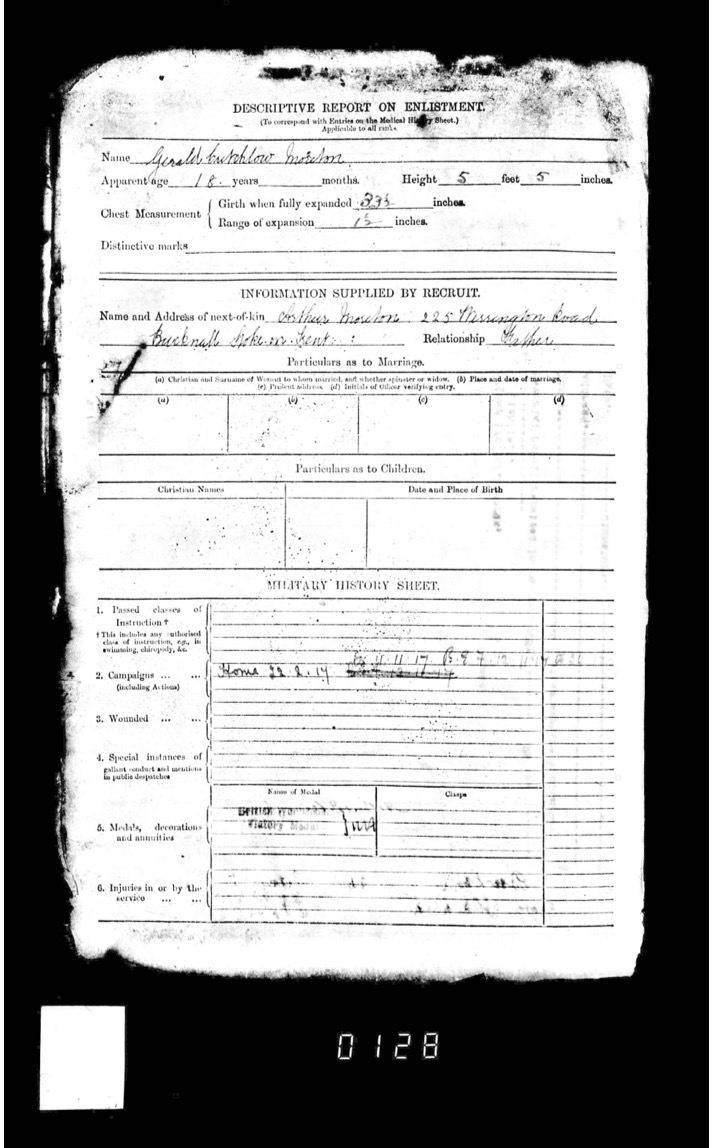
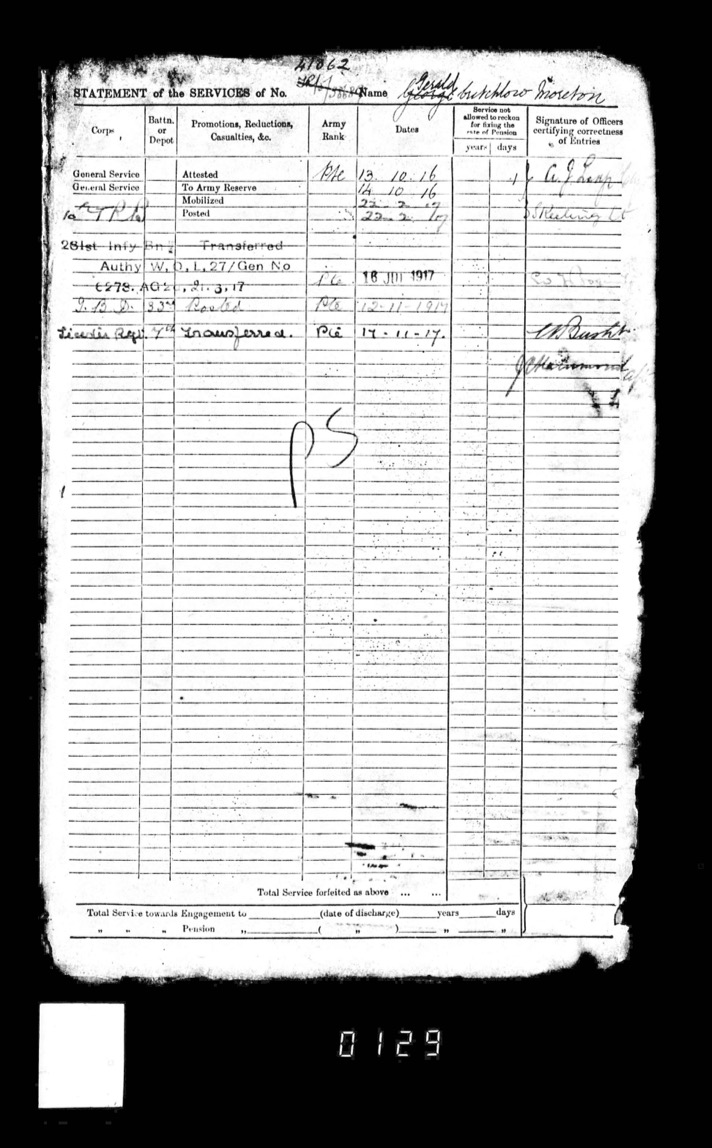
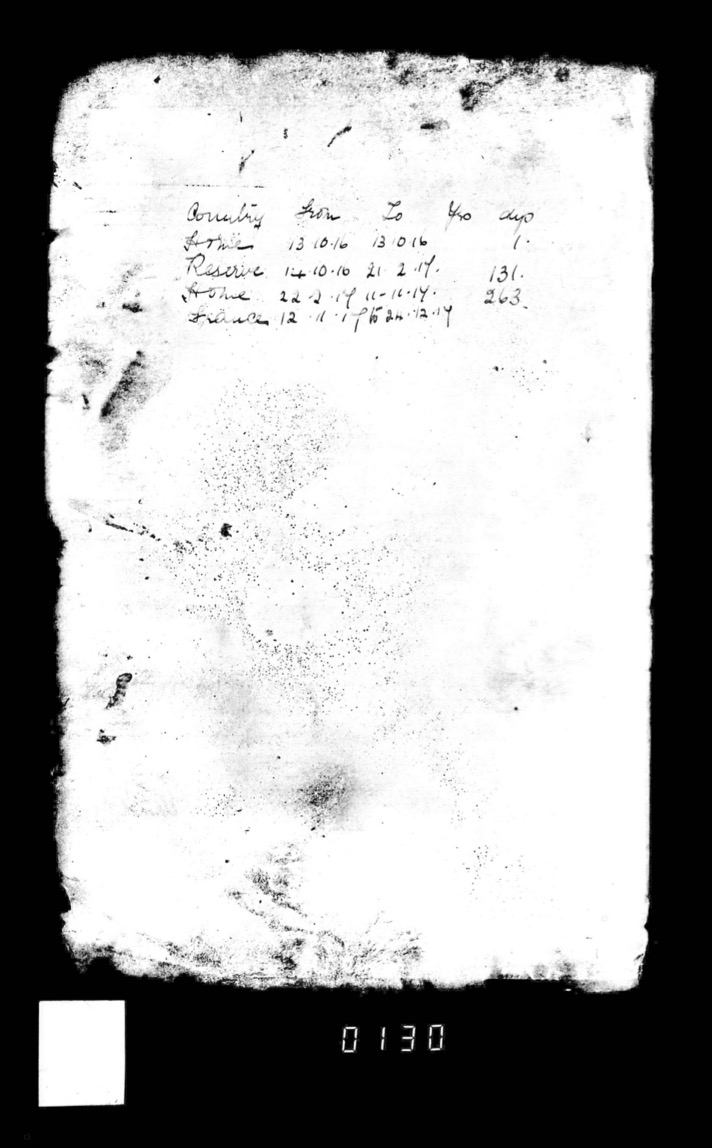
At the start of the war, Gerald was working as a cycle mechanic and on the 13th October 1916 – 5 days after he turned 18 years old on the 7th October 1916 – he made his way to the Hanley Army Recruitment office to volunteer. He was allocated to the Army Reserves but was not mobilised until the following February 1917 when he was posted to the 10th Training Reserve Battalion of the Leicestershire Regiment, otherwise known as “The Tigers” after their long and honourable service in Hindustan, India in the 18 years from 1804.
Gerald remained in the UK from Feb 2017 to November 1917, before on the 17th November 1917 being posted to join the 7th Battalion of the 110th Leicestershire Regiment of the British Expeditionary Force in Epehy, France.
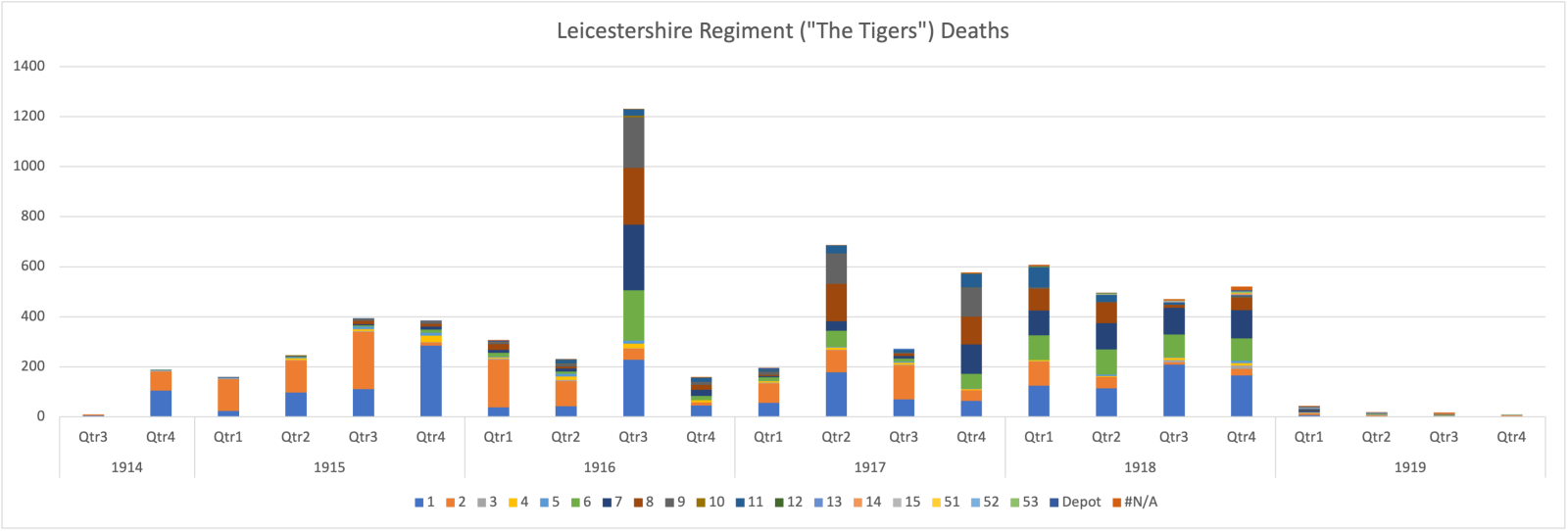
Since the start of the First World War, the Tigers had been engaged in some of the heaviest fighting in the trenches of Belgium and France. The image below shows the deaths by quarter, reflecting the intense fighting particularly in Q3 of 1916.
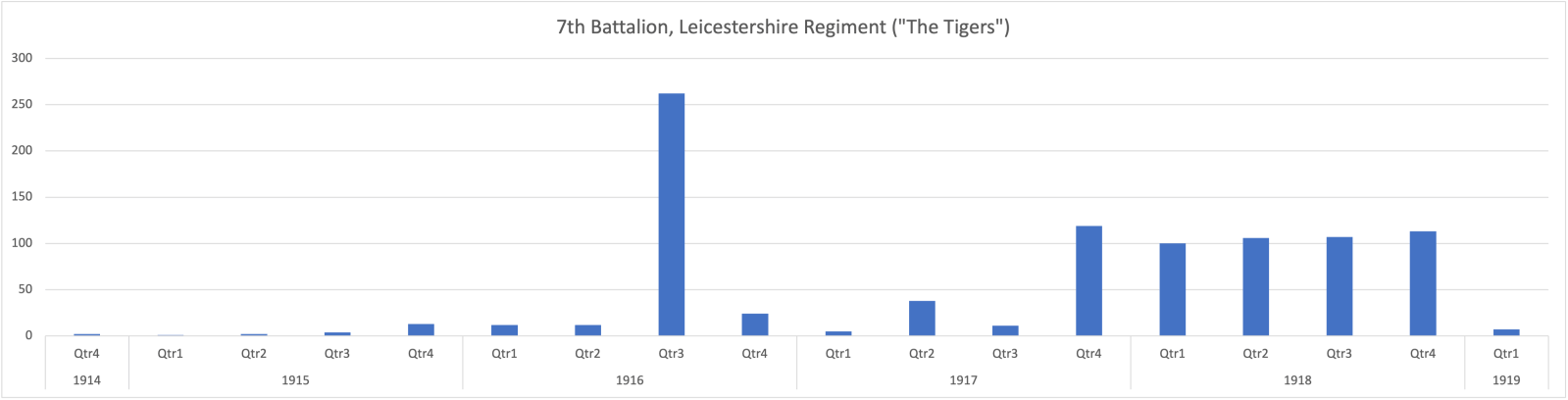
The 7th Battalion which had been raised in September 1914 as part of Kitchener’s Second New Army and proceeded to France on the 29th July 1915. During 1916 and 1917, they had been engaged in significant battles (and losses) at Ypres, Belgium including Polygon Wood, Broodseinde and the Second Battle of Passchendaele. The image below shows again the deaths by quarter.
“In November 1917, with the abandonment of the Third Ypres campaign in a terrible wasteland of mud and water and following the near collapse of the Italian Army at Caporetto, the 21st Division, including the Leicestershire Brigade, received orders to proceed forthwith to the southern Alps. The intention was to reinforce the Italians with a number of British divisions, but back on the Western Front fate intervened once more. The Cambrai offensive, launched almost as an afterthought on 20 November, brought unexpected success. The ground here was rather dry and relatively undamaged – unlike that around Ypres – and made good going for tanks.
Some 300 machines were launched into the first day of the battle, which had been carefully thought out by the staff of the Tank Corps and which was attended by unprecedented gains of ground. The Hindenburg Line was penetrated for several thousand yards, many prisoners were captured, and back in Blighty the church bells were rung in many villages to herald the end of the war. Unfortunately the Germans had other ideas. The infantry who had accompanied the tanks found themselves overstretched, and with scarcely any reserve formations left after the campaigns of 1917, were desperately short of reinforcements. The Germans recovered quickly from their initial shock, and on 1 December launched a massive counter-attack on the dangerously exposed flank of the salient, which the offensive had created. Moving fast, with lightly-armed storm troops, the Germans effectively cut off a large portion of the attacking formations, some of whom fought to the bitter end whilst many others were forced to surrender.
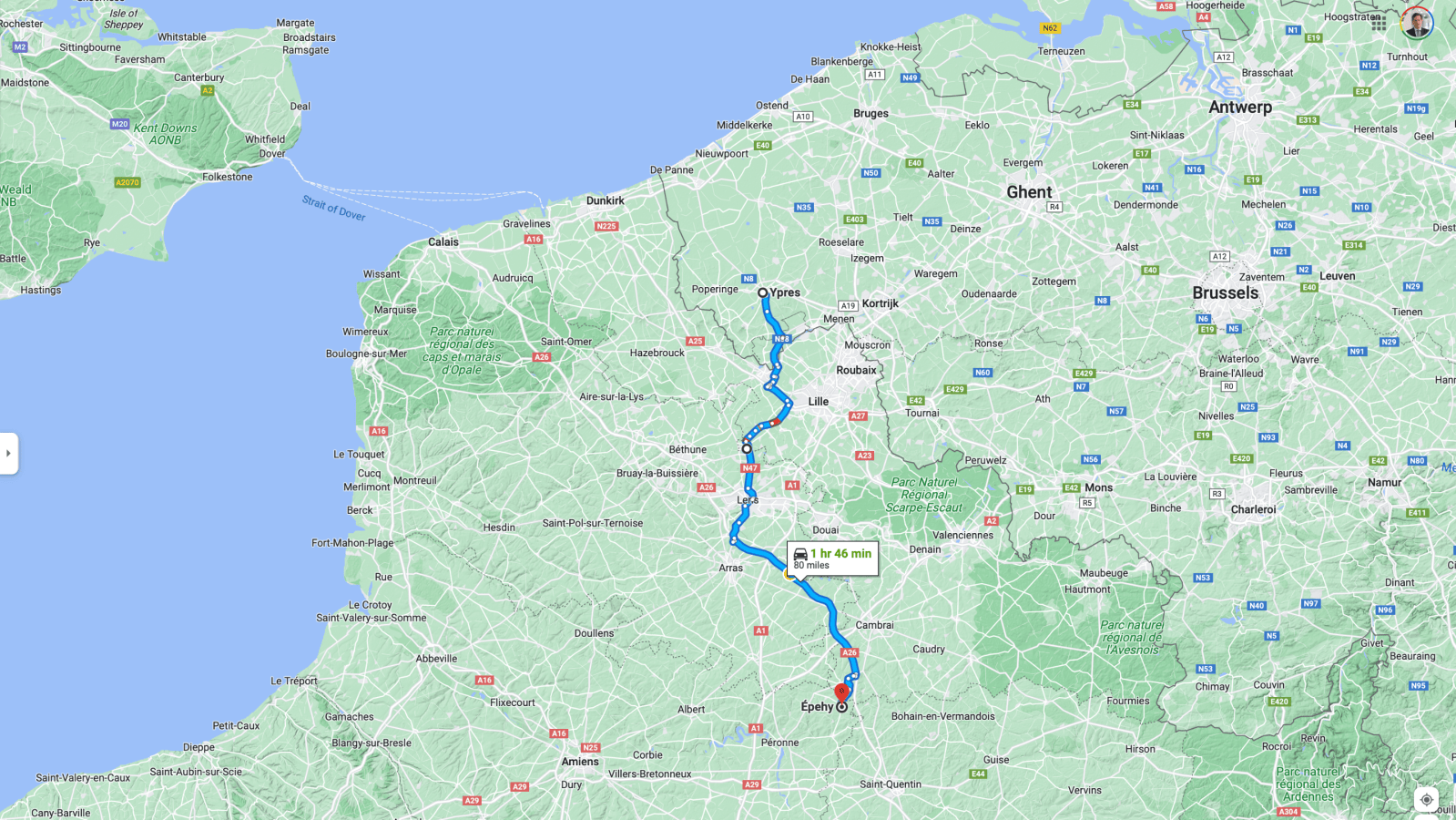
The move of the 21st Division to Italy was cancelled, and the 110th Brigade was thrown into the confusion of the battle. Arriving by train at Tincourt, behind the Cambrai front, they marched via Villers-Faucon to the St Emillie-Epehy sector. The weather was atrocious, and officers and men alike were forced to stand and wait in the pouring rain without top-coats (transports were many miles in the rear) for two hours as administrative chaos was resolved and the brigade staff reconnoitred the positions they were to take over. Everywhere were signs of the battering the brigade being relieved, which was part of the 55th (West Lancs) Division, had taken. David Kelly remembered: somewhere near Vaucellette farm we found an artillery major lying dead in pink silk pyjamas, rifle in hand, in front of his battery headquarters, which he must have awakened to find in No-Mans-Land.’
However, by the time the 110th Brigade reached the firing line to the east of Epehy village, the front had stabilised, and the German counter offensive had petered out. The British army, after such early promise, was either back on the line on which it had started or slightly behind it.
The winter was now to be spent improving the defences of the Epehy district, and digging new emplacements and trenches in front of the village. For some weeks only fire trenches existed, and the front line had to be approached overland, during the hours of darkness, until communication trenches could be dug. The Royal Engineers, were also hard at work within Epehy village, constructing concrete emplacements, blockhouses, and observation posts, some of which are still visible today. Reinforcements were absorbed whilst at Epehy, and for a young soldier just posted to France the sector could appear full of danger. One such soldier was Private FE. Pothecary, who arrived in France in January 1918 and was posted to the 6th Battalion:
The Battalion was in the line at Epehy & we was at Saulcourt and we had to go up each evening as carrying parties and go out to repair the barbed wire which was very frightening at first. Our officer said, ‘Don’t worry, if you are going to get it, you won’t know anything about it and that took some of the fear away… We lived in a deep dug out with two entrances (about thirty steps down). We had to pass through a gas prevention chamber half way down. The beds were wire netting racks, three tiers high, and the only light was from candles. It was always hot and stuffy.
At the top of the steps there was always a gas guard who would beat on a hanging shell case when there was gas about. He would also use a spinning rattle. We had to go down to the front line every day and repair damage and do anything that wanted doing, digging latrines etc (never a dull moment). We had three days of this and then the front line. Here we lived in slits cut in the front [beneath the parapet, and covered with a ground sheet. Food came up in big containers from the field kitchens carried on stretcher type wooden frames, ‘no fires in the line’. At dusk, we had to ‘Stand To’ and then it was ‘two hours on, four hours off to stand on the fire step all night, which was a cold and dreary job.
Sometimes great rats would run just in front of you and put the wind up you. At dawn everyone ‘Stands To’ after which we would have a foot inspection and whale oil would be issued to rub on the feet to prevent frost bite.”
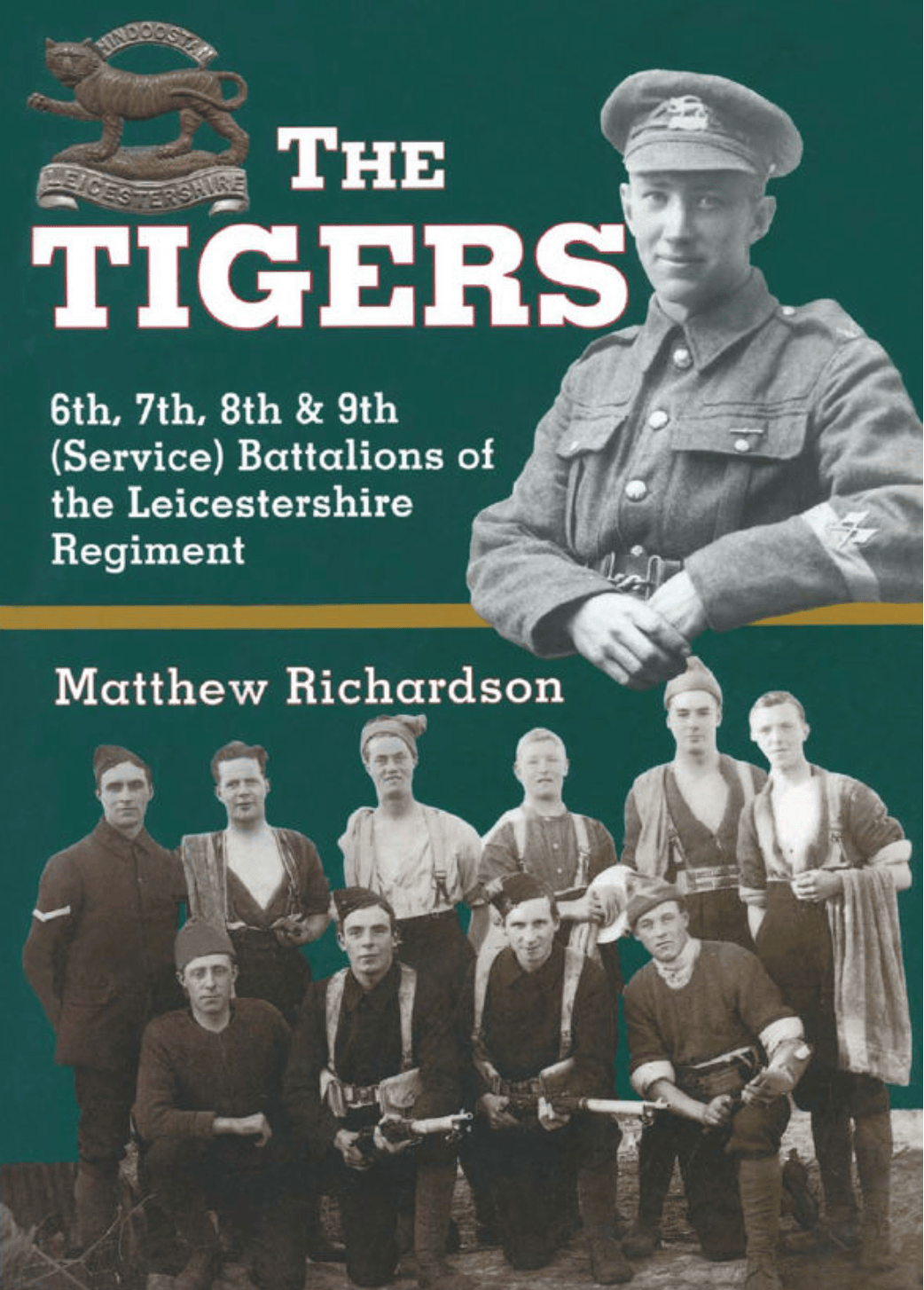
The Tigers
The Tigers’ is the first major history of the Leicestershire Regiment in the Great War to be published since the 1930’s. Weaving personal recollections with official accounts, it brings the character of the four battalions raised in Leicestershire in response to Lord Kitchener’s call for volunteers vividly to life.
Gerald’s arrival at Epehy was therefore the “calm between the storms” for the 7th Battalion. After the horrors of October 1917, they were about to enter the next wave of battles from late December 1917 through to the Armistice in 1918.
Whilst Gerald travelled to France, the Battalion was on a daily march from Ypres to Noote Boon via Locre and Bailleil; to Caudescure via Bleu and La Couronne; to Gonnehem via Merville and Mt Bernenchon; to Coupigny via Annezin, Haillicourt and Berlin; to Frevillers via Verdure, Fresnicourt and Gauchin Legal. “During the period 16th to 25th no man fell out on the march”. On the 24th November, a contingent of 40 “other ranks” joined the Battalion, on the 27th a further 97 joined and on the 11th December a further 35 joined – with Gerald likely among these new ranks. The Battalion was ordered on to Tincourt; then Courelles and finally to Epehy.
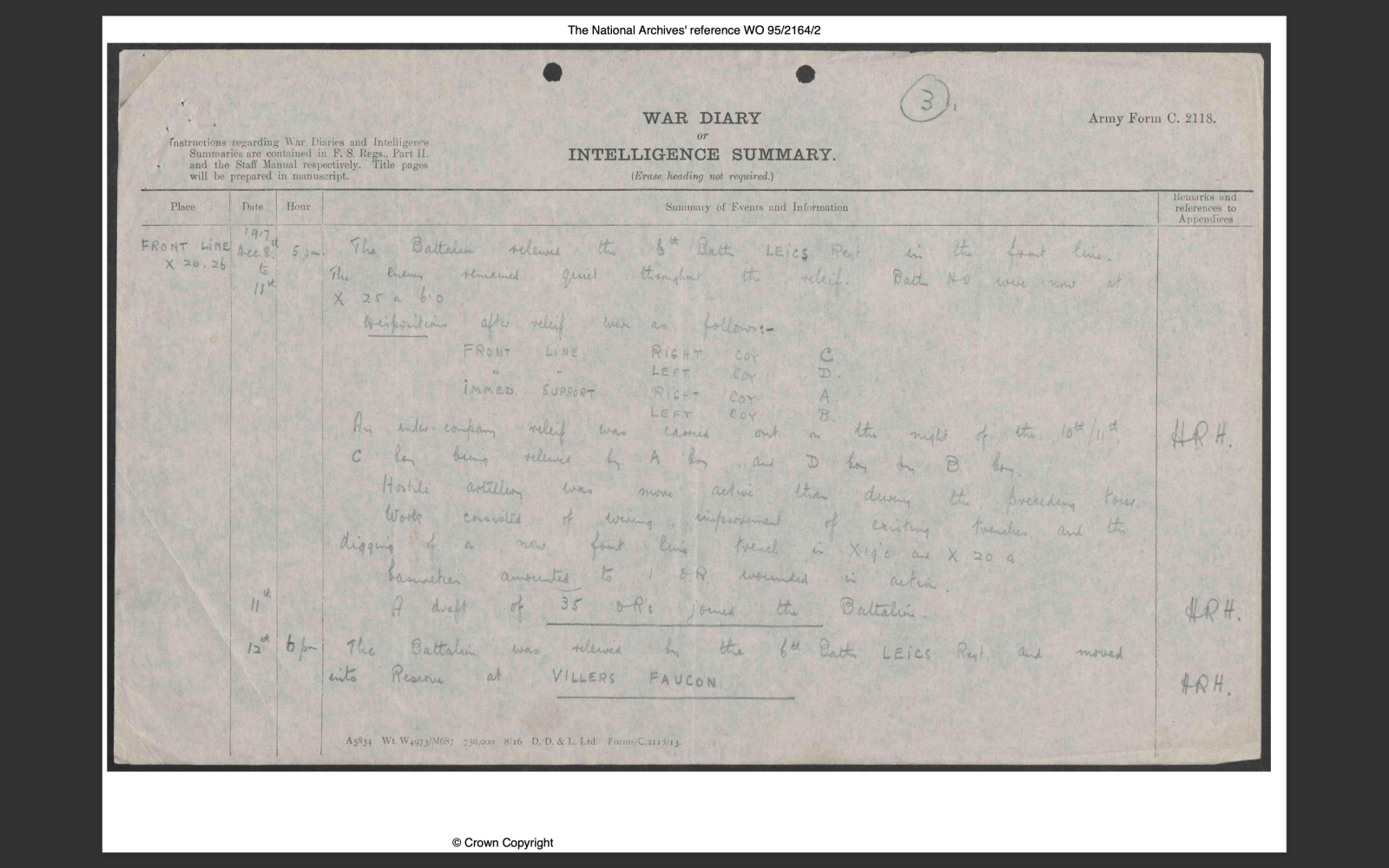
“There was very little hostile activity apart from intermittent shelling and sniping by machine guns at long range. The nights were spent in consolidation of our lines, and the location of enemy posts by means of patrols. Sentry groups were located at Parrs Bank. No hostile patrols were seen and no event of importance took place during this period.”
By the 11th, “Hostile artillery was more active than during the previous tour. Work consisted of wiring, improvement of existing trenches and the digging of a new front line trench in X19c and X20a.” On the 13th, “The day was spent in cleaning up, training and re-organising“. The 14th similarly “Spent in training and re-organising“
On the 16th, “The battalion relieved the 6th Batt. Leic. Regt in the left sub-sector. Quiet relief. Dispositions after relief were: Right Front Coy – C Coy; Left Front Coy – D Coy; Right Suppt Coy – A Coy; Left Suppt Coy – B Coy; Batt H.Q. at X25 65o. The dispositions remained the same throughout the tour. A patrol went out on the night of the 18th and dispersed a hostile working party with rifle grenades. On the return journey, they threw several bombs into an unoccupied dugout. Work was continued on the front line and wiring the same. The new front line was dug to a depth of 7 foot 6″ and a width of 7 foot in the right post. Casualties during tour – 3 O.R. wounded in action.“
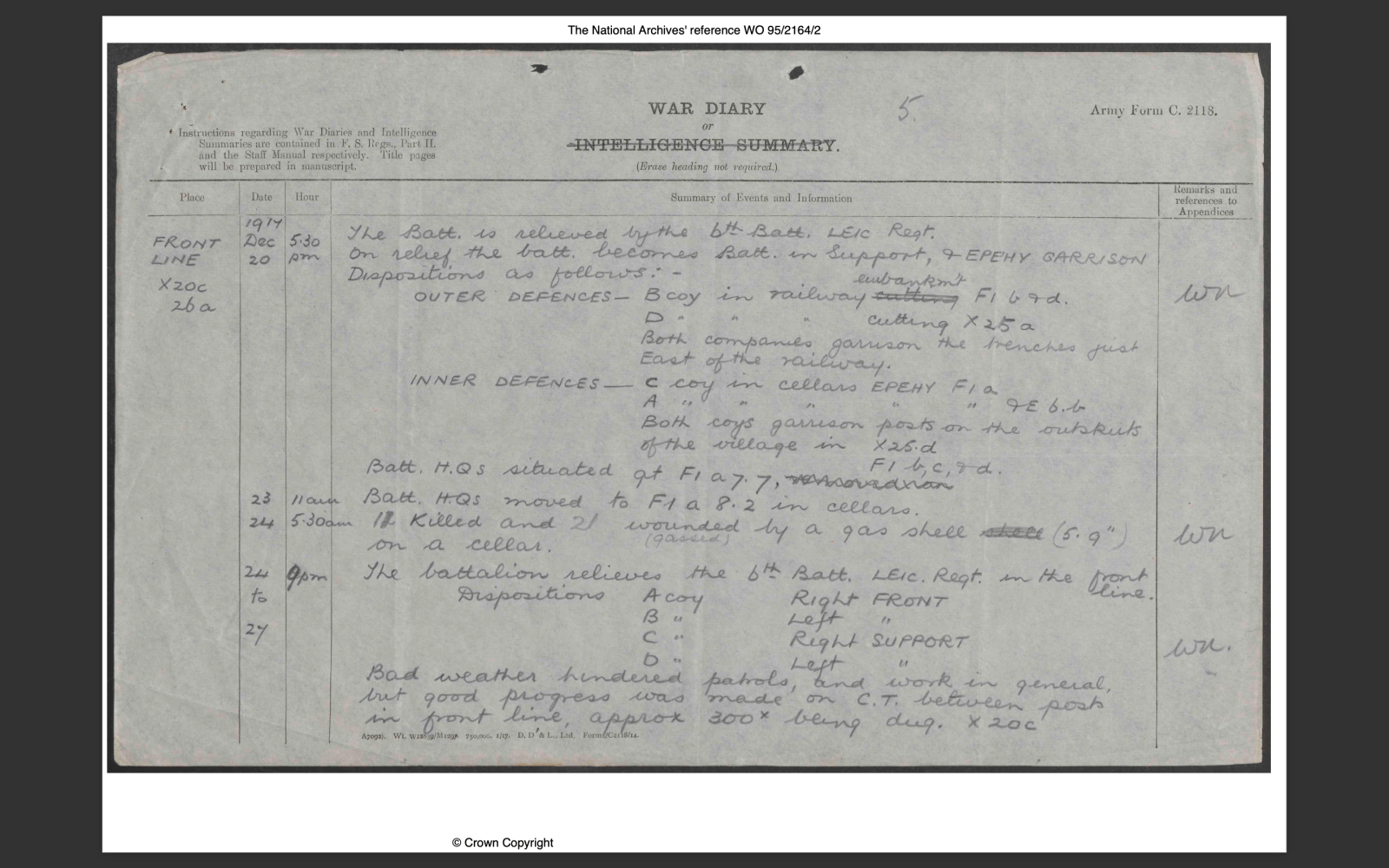
On the 20th, “The Batt. is relieved by the 6th Batt. Leic. Regt. On relief the batt. becomes the Batt. in Support & Epehy Garrison. Disposition as follows:
| OUTER DEFENCES – | B Coy in railway embankment F1 b&d D Coy in railway cutting X25a Both companies garrison the trenches just East of the railway |
| INNER DEFENCES – | C Coy in cellars Epehy F1a A Coy in cellars Epehy F1a & Eb.b Both companies garrison posts on the outskirts of the village in X25.d |
On the 23rd, “Batt H.Q.s moved to F1a 8.2 in cellars.“
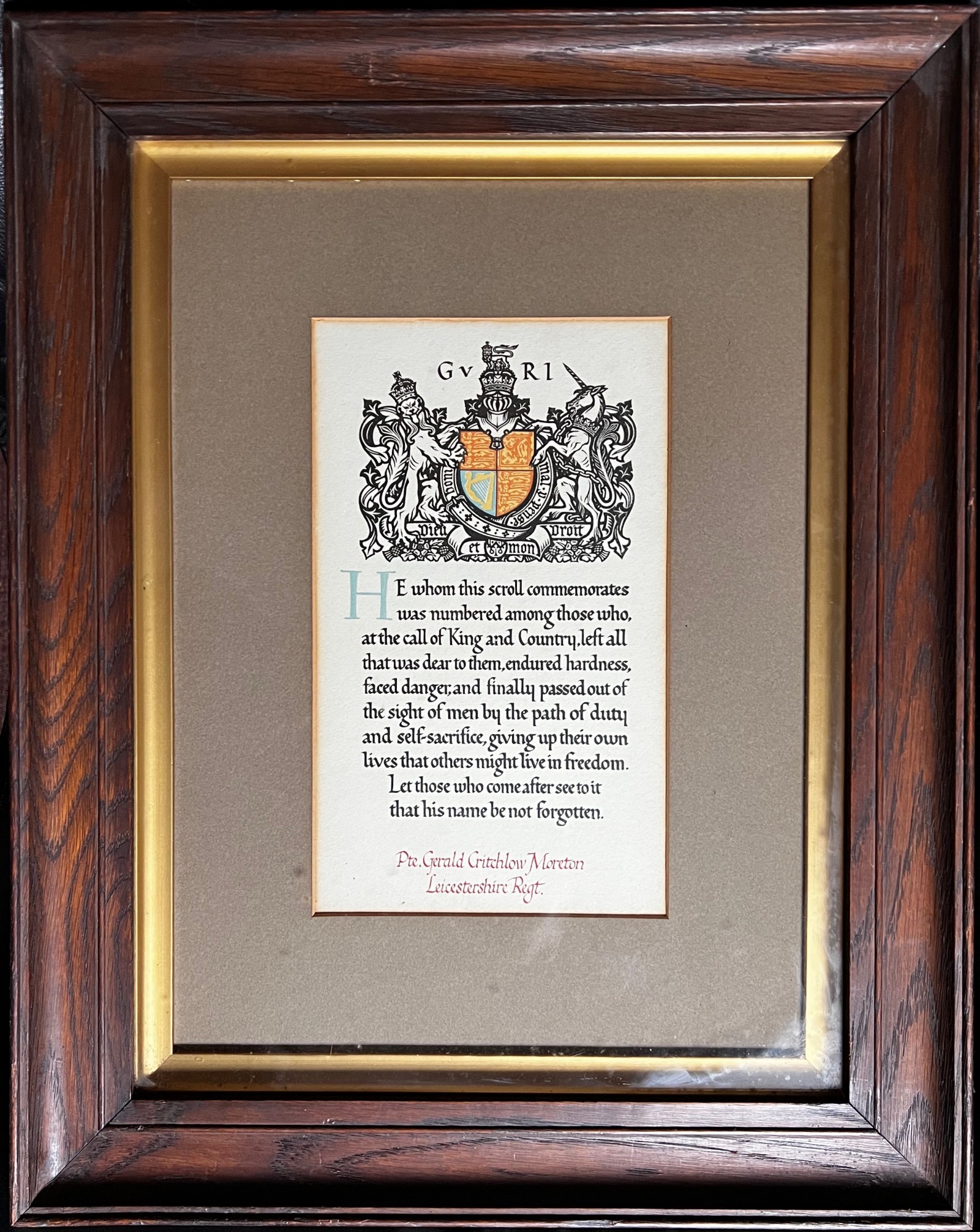
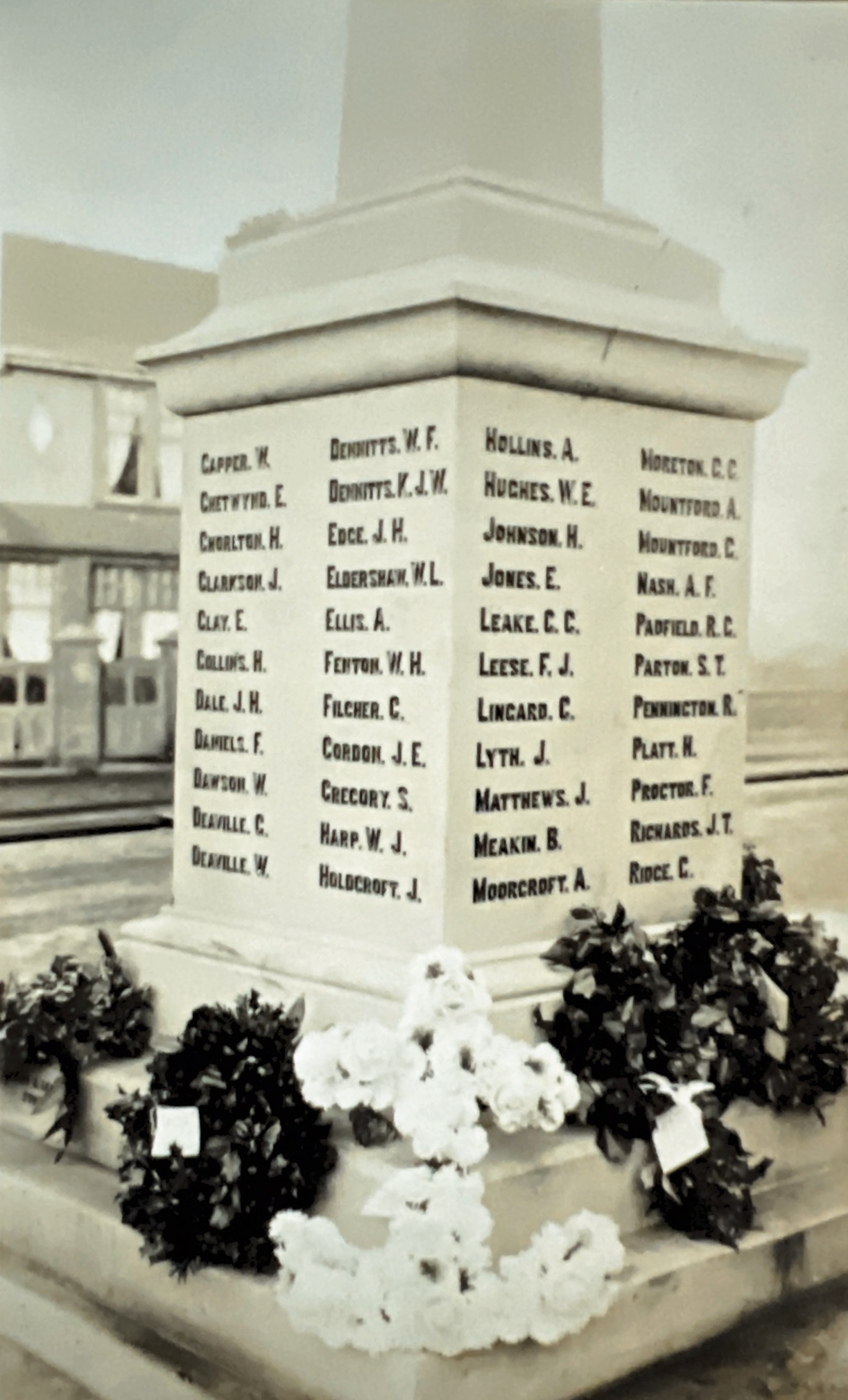
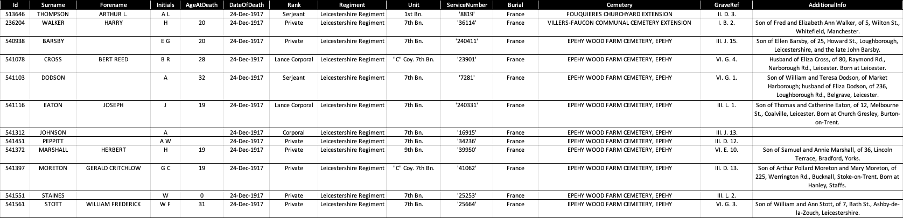
Ultimately this decision proved fatal. At 5:30am on Christmas Eve, 24th December 1917, the next wave of attacks started with a 5.9 inch (150mm) gas shell that penetrated the cellars where ‘C’ Company were garrisoned on the outskirts of Epehy. The attack killed a total of 10 men and wounding a further 21 men from the 7th Battalion including Private Gerald Critchlow Moreton.
Gerald had been there barely 5 weeks and 2 days.
“Dulce et Decorum Est“…Latin phrase is from the Roman poet Horace: “It is sweet and fitting to die for one’s country.”